Why Does My Puppy Pee When Greeting People?
/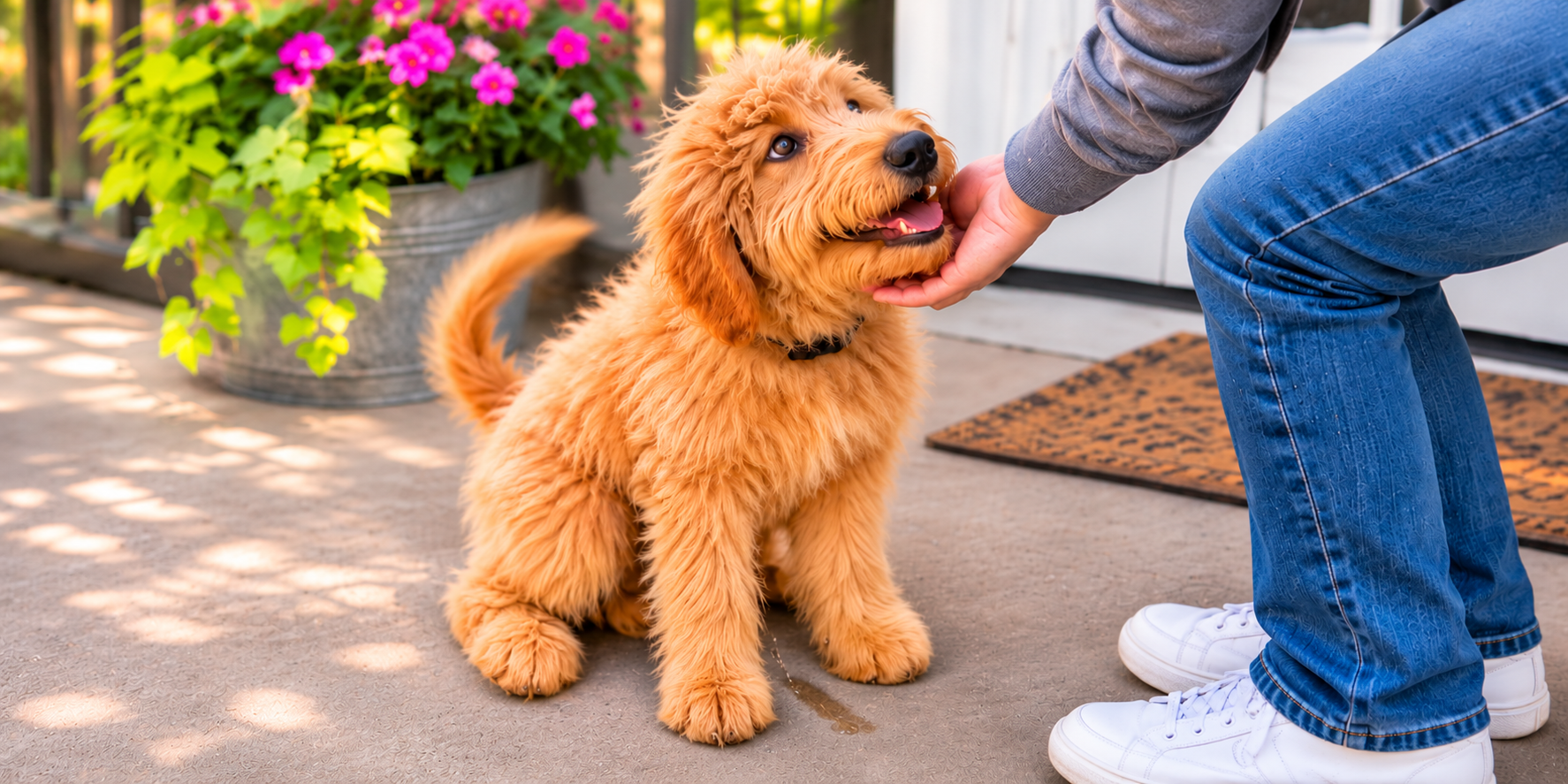
I recently worked with a client whose young Goldendoodle would sometimes urinate when greeting people. It became especially problematic when someone new would reach down to pet her and suddenly find themselves getting peed on. It's embarrassing for the owner, surprising for the person doing the petting, and very easy to misunderstand.
It's also easy to assume the dog has a housetraining problem. After all, there's pee on the floor, so naturally that's where our minds go. But a perfectly housetrained dog can still urinate during certain social interactions. Two common reasons we see this, especially in puppies and younger dogs, are excitement urination and submissive urination.
They can look very similar because both leave you cleaning up a puddle, but what's happening with the dog can actually be quite different.
Excitement Urination and Submissive Urination Aren't Quite the Same
Excitement urination is pretty much what it sounds like. The dog becomes so excited that he temporarily loses some bladder control. We often see it during greetings. You come home and your puppy is beside himself with excitement. His entire body is wiggling, his tail is going a hundred miles an hour, he's bouncing around trying to greet you, and somewhere in the middle of all that excitement he pees.
It can also happen when visitors arrive, during play, or anytime the dog's excitement level shoots up quickly. With excitement urination, the rest of the dog's body language generally looks exactly like that. He's happy, animated, wiggly, and eager to interact.
This is especially common in puppies and young dogs, and the good news is that many dogs outgrow excitement urination as they mature and develop better bladder control. That doesn't mean we can't help them along the way. Keeping greetings calmer and giving the dog a chance to empty his bladder before an exciting situation can make those months of growing up a lot easier for everyone.
Submissive urination can happen during a greeting too, but now I want you to look at the rest of the dog. He may lower his body, pull his ears back, tuck or lower his tail, avoid direct eye contact, become very low and wiggly, or even partially roll onto his side or back.
This dog isn't necessarily urinating because he's overwhelmingly happy to see someone. The interaction itself may feel intimidating or overwhelming to him, and sometimes we humans unknowingly make that interaction even harder.
Think about how people often greet a cute puppy. We walk directly toward him, look right at him, bend over him, reach a hand over the top of his head, and start petting. To us, we're being friendly, but to an uncertain young dog, that's a lot of social pressure coming at him all at once.
That was an important piece with the young Goldendoodle I mentioned earlier. The urination wasn't random. Looking at what was happening immediately before it gave us much more useful information than simply looking at the puddle afterward.
Why Punishment Doesn't Help
This is probably one of the most important things for owners to understand. Scolding the dog, telling him "no," getting frustrated with him, or assuming he "knows better" because he's already housetrained isn't going to solve the problem.
If a dog is submissively urinating because an interaction already feels intimidating, think about what happens when we add an angry voice or punishment. We've just made that interaction even more intimidating. Instead of teaching the dog not to urinate, we may actually make him more concerned about similar interactions in the future.
Punishment isn't useful for excitement urination either. The dog didn't make a conscious decision to empty his bladder because someone walked through the door. We're dealing with an involuntary response associated with his level of excitement. In either situation, getting upset about the puddle isn't addressing the reason it happened.
What we want to do instead is look at what is happening before the urination and change that part of the interaction.
Changing the Greeting
For submissive urination, one of the simplest things we can do is take some of the pressure off the dog. If visitors are a trigger, I may ask them to completely ignore the dog when they first arrive. They don't need to walk directly toward him, immediately reach down to pet him, or hover over him trying to convince him that they're friendly.
Give the dog a little space and allow him to approach rather than having the person immediately approach him. When he is comfortable interacting, the person can turn slightly sideways, keep things calm, and pet under the chin, on the chest, or along the side rather than reaching over the top of his head.
For some dogs, simply changing the way people greet them can make a surprisingly big difference.
With excitement urination, we're still going to make greetings calmer, but for a different reason. Instead of reducing social pressure, we're trying to keep the dog's excitement from going from zero to one hundred the moment someone walks through the door.
That may mean coming inside without immediately talking to, touching, or exciting the dog. Once that initial burst of excitement has passed, the greeting can happen much more calmly. It can also help to make sure the dog has had an opportunity to go outside and urinate before visitors arrive when you know someone is coming.
Training can be very helpful with both problems, but we're not actually teaching the dog "don't pee." We're giving him another way to handle the situation.
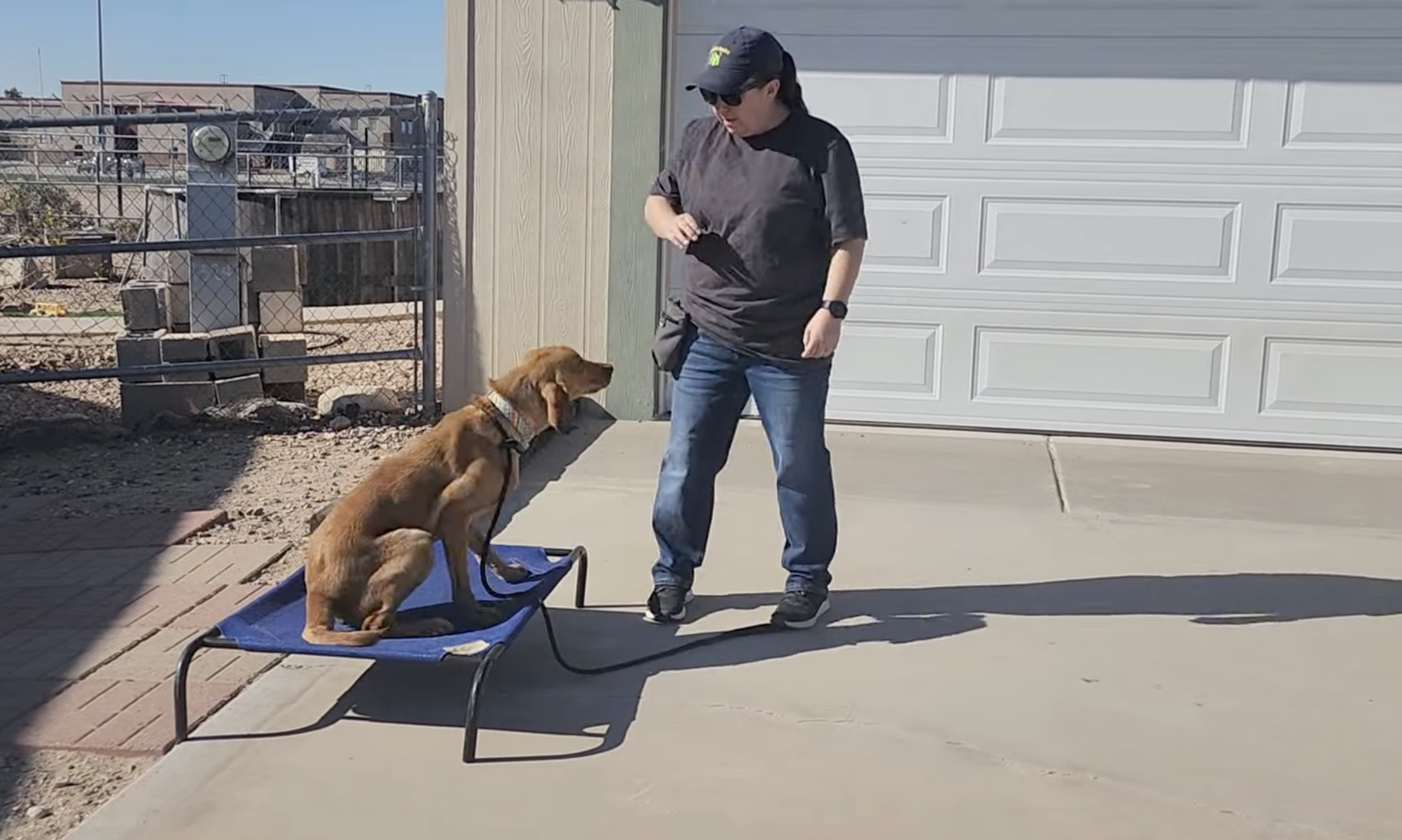
Maybe he learns to go to a mat when someone comes through the door. Maybe he has a simple behavior he can do that gives him something familiar to focus on. For a dog struggling with submissive urination, I also want to work on confidence away from the actual problem through positive training, successful experiences, and exposure to different people without forcing interaction.
We don't build confidence by repeatedly putting a dog into an uncomfortable situation and waiting for him to get over it. We build it by giving him experiences he can handle successfully and gradually asking for more as he becomes comfortable.
Submissive urination can also improve considerably as a young dog matures and becomes more confident. Some puppies who are very submissive in their social interactions simply become more comfortable with people as they gain experience and grow up. How we handle those early interactions matters, though. If we can reduce the pressure instead of adding to it, we're giving the dog a much better opportunity to develop that confidence.
Look at the Whole Dog
If you're trying to determine which type of urination you're seeing, pay attention to the circumstances and the dog's body language rather than focusing only on the accident itself.
A puppy who is bouncing around like a pogo stick when you come home and leaves a little puddle in the process is probably telling us something very different from the puppy who crouches, pulls his ears back, lowers his body, and urinates when a stranger bends over to pet him.
It isn't always perfectly one or the other either. Dogs can have mixed emotions during greetings. A dog may want to approach someone while also feeling uncertain about the interaction, which is another reason looking at the entire dog and what was happening immediately before the urination is so important.
We also don't want to assume that every unexpected urination problem is behavioral. If a dog suddenly begins urinating unexpectedly, starts urinating much more frequently, appears uncomfortable, strains to urinate, or the accidents don't seem connected to greetings, excitement, or social interactions, it's worth talking with your veterinarian to rule out a medical reason.
For the young dog who piddles when someone exciting walks through the door, or the puppy who urinates when a new person bends down to pet him, the important thing to remember is that neither dog is trying to be difficult or forgetting his housetraining. In many cases, time and maturity are going to help too. In the meantime, understanding what the dog is feeling, changing the way we handle those situations, and giving him the chance to develop better bladder control and confidence can make a big difference.