Diabetic Alert Dogs
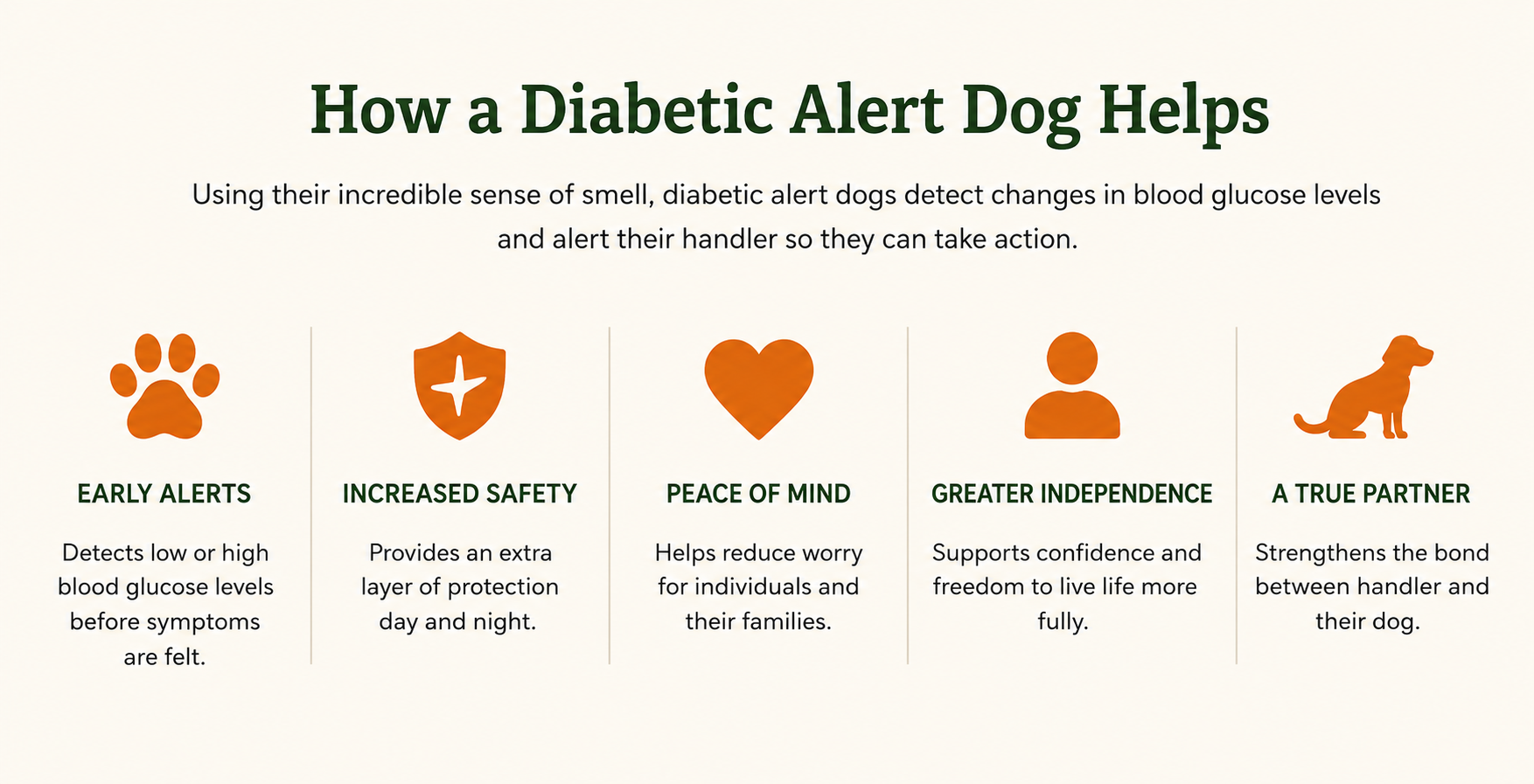
Helping individuals and families living with diabetes gain greater confidence, independence, and peace of mind through highly trained diabetic alert dogs. A diabetic alert dog is an added layer of security alongside glucose monitors and meters, not a replacement for them, trained to detect changes in blood glucose and alert their handler, day or night.
FREQUENTLY ASKED QUESTIONS
-
Diabetic alert dogs are highly trained to recognize the unique scent changes associated with low and high blood glucose levels. A diabetic alert dog is a living partner and another valuable tool in your diabetes management toolkit, working alongside your glucose monitors, meters, and medical guidance rather than replacing any of them.
No alert dog, no matter how well trained, will catch every single glucose change 100% of the time. Reliability is influenced by several factors, including the dog's individual abilities, the bond between dog and handler, and consistent reinforcement training. What consistent, dedicated training does provide is a remarkably reliable second layer of awareness, one that many families come to trust deeply.
A dog's skills don't stay sharp on their own. The family's ongoing commitment to reinforcing training throughout the dog's working life plays a critical role in how reliable that dog remains, this is a true partnership, and the results reflect the effort both partners put in. Reliability tends to grow over time as that partnership deepens, which is why we stay involved well past delivery day. Ongoing support and continued reinforcement are a real part of what makes these teams successful long-term.
-
Yes. We've successfully trained diabetic alert dogs for both children and adults. Every placement is different, and factors like the child's age, maturity, home environment, and family involvement all play a role in how the partnership is built. In many cases with younger children, a parent or family member takes on a larger role in the dog's day-to-day handling and reinforcement, especially in the early stages. We'll talk through what that looks like for your specific family during the process.
-
Most dogs complete Phase One, the foundational obedience, public access, and scent detection training, in about 12 -15 months, typically finishing around 1 to 1.5 years old. Every dog learns at their own pace, so we don't rush a dog through training just to meet a set timeline. Phase Two continues once your dog comes home, as your new partnership puts everything learned into daily, real-world practice.
-
Our diabetic alert dogs are trained using positive, choice-based training methods that focus on building confidence, understanding, and a strong working relationship with their handler.
Rather than relying on aversive training equipment, our dogs are introduced to practical tools that help set both the dog and handler up for success. At delivery, our dogs go home trained to work on a Heather's Heroes Sidekick, which combines the simplicity of a slip lead with the guidance of a head halter into one easy-to-use training tool. They are also comfortable working on a properly fitted martingale collar.
We do not train our service dogs using electronic collars, commonly referred to as "shock collars," as part of our program. Our goal is to create dogs that make good choices because they understand what is being asked, not because they are avoiding a correction.
-
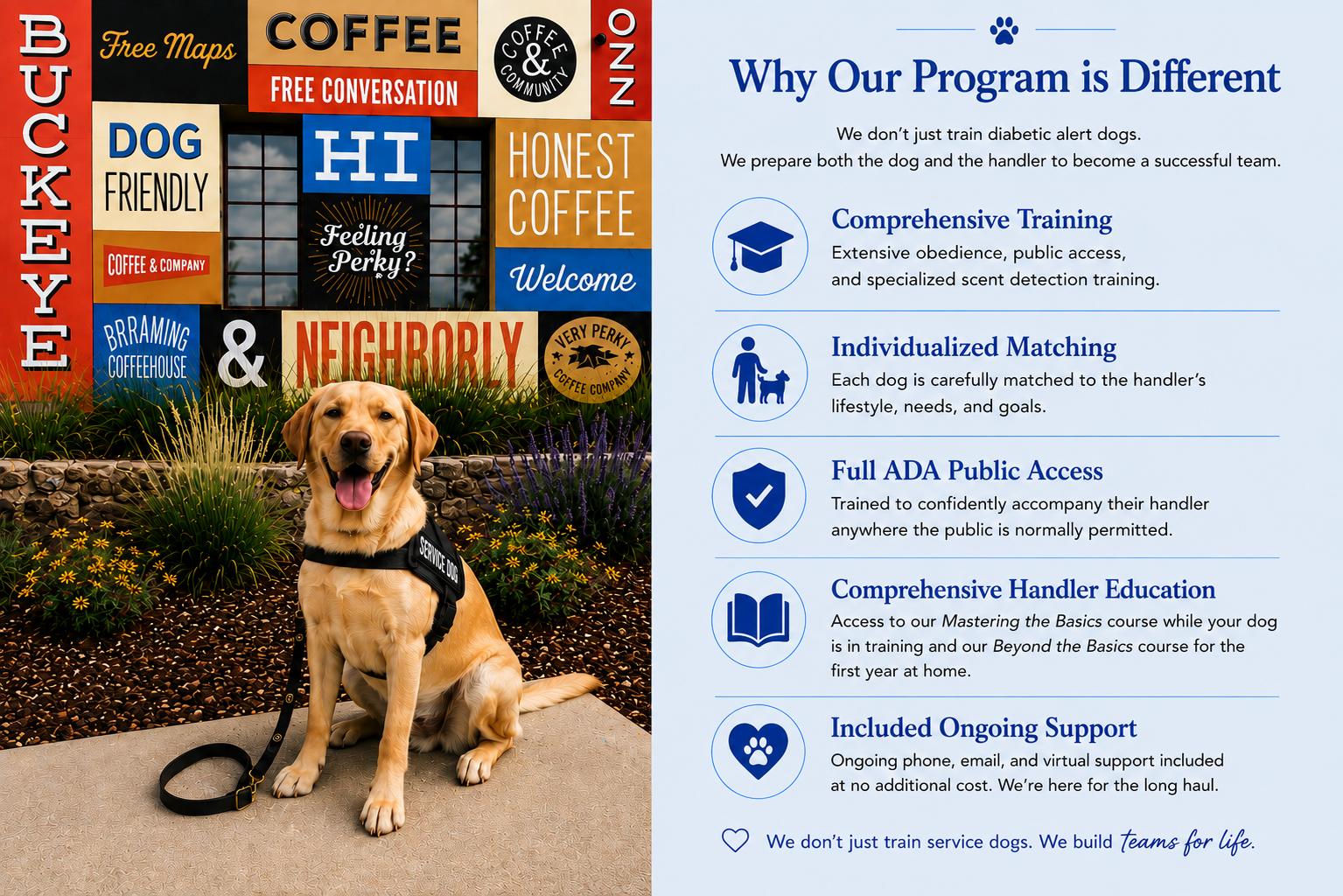
We don't simply place dogs. We build teams.
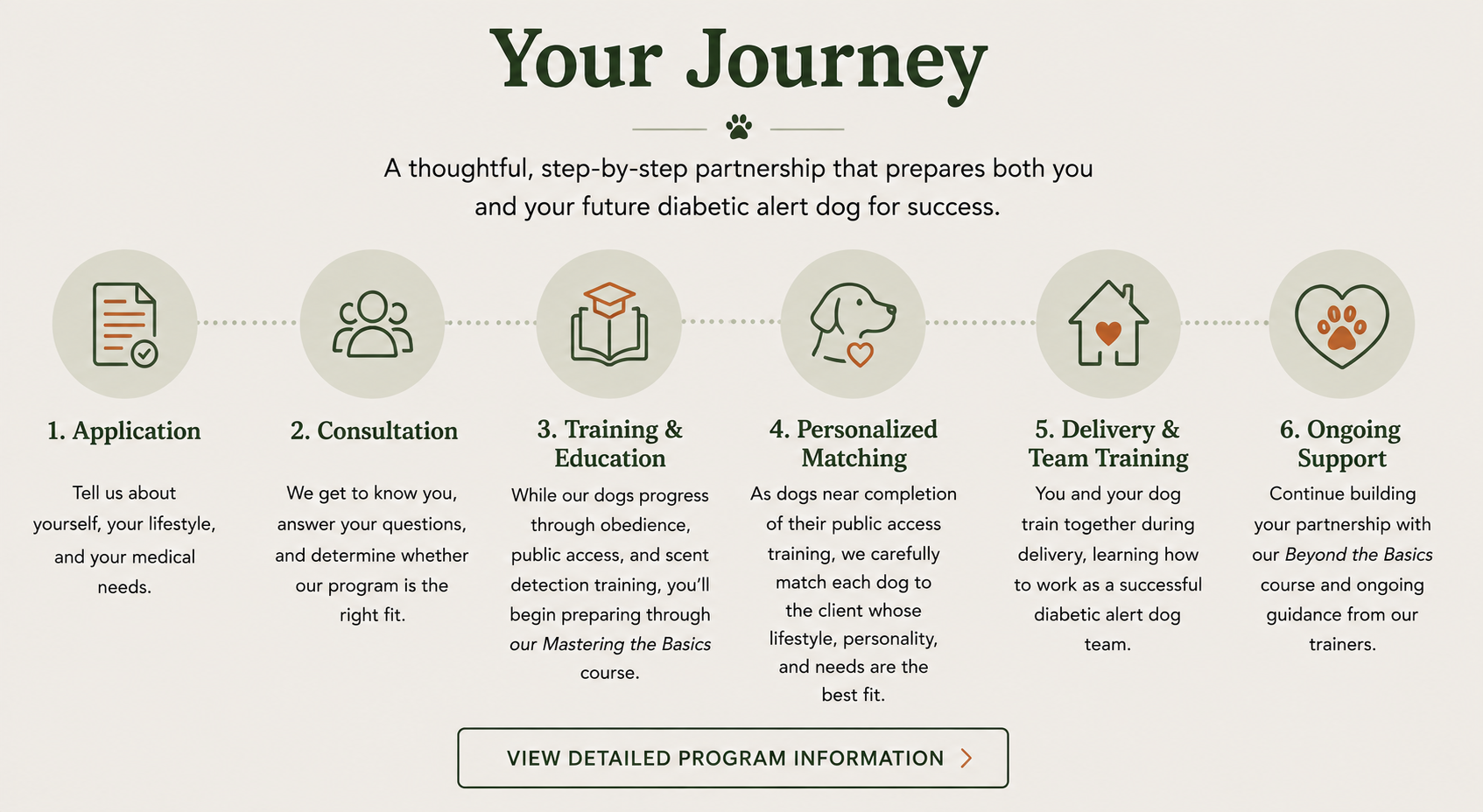
Every dog in our program is evaluated throughout training for temperament, confidence, work ethic, environmental soundness, activity level, and overall suitability for service work. At the same time, we take the time to understand each client's lifestyle, family, daily routine, goals, and individual needs.
Rather than trying to make every dog fit every client, we carefully pair each team based on compatibility. This thoughtful matching process helps create a partnership that is enjoyable, effective, and built to last.
Once a match has been made, we continue tailoring the dog's experiences to prepare them for the environments and lifestyle they will encounter after going home, making the transition as seamless as possible.
-
Our commitment to your success begins long before delivery day and continues well after your dog comes home.
While your dog is in training, you'll receive access to our Mastering the Basics course. This course is designed to prepare you for life with a diabetic alert dog by helping you understand canine learning, training principles, service dog expectations, public access, and the skills needed to become an effective handler. By the time your dog is ready for placement, you'll already have a strong understanding of how to build a successful partnership.
After delivery, your education continues with our Beyond the Basics course. This year-long program provides ongoing guidance throughout your dog's first year at home, helping you strengthen your partnership, navigate common challenges, and continue reinforcing your dog's training as they mature and settle into everyday life.
In addition to these educational resources, we provide ongoing phone, email, and virtual support at no additional cost. Whether you have a quick question or need guidance through a new situation, we're here to help.
Our goal isn't simply to place a trained dog. It's to equip every handler with the knowledge, confidence, and ongoing support needed to build a successful partnership for years to come.
-
Our Phase One diabetic alert dog program starts at $16,000 for a Labrador or Goldendoodle. Specialty breed requests may increase this cost.
This includes your dog's selection and matching, current vaccinations, spay/neuter, and extensive obedience, public access, and scent detection training, everything needed for your dog to come home ready to begin working with you. It also includes the education and ongoing support that carries your partnership well beyond delivery day, from the Mastering the Basics course during training, through Beyond the Basics and continued support once your dog comes home. (See "What support do you offer before and after my dog is home?" )
We offer payment plan options to help make this investment more manageable. Reach out to us directly and we'll walk you through what that looks like for your family.
-
Yes. Once your dog completes Phase One, they meet the legal standard under the ADA to work as a service dog, meaning they can accompany you in public spaces alongside you from day one. Your dog comes home having completed extensive obedience and public access training, along with the introduction of scent detection and alert work.
Task reliability continues to build significantly during Phase Two, the first year at home. Just as a new teacher, doctor, or athlete has the credentials to do their job well before they've built years of real-world experience doing it, your dog's alerting will grow more consistent and finely tuned to you specifically as your partnership develops. This is a completely normal part of the process, not a sign anything is behind schedule, and it's exactly why we stay involved with education and support throughout that first year, to help you and your dog grow into a truly reliable team together.