Can I Train My Own Service Dog?
/Can I Train My Own Service Dog?
This is a question we hear often, and the short answer is yes.
Many people successfully train their own service dogs. For the right person and the right dog, owner-training can be a wonderful option.
But there is a much bigger question hiding behind that first one.
Not simply, “Can I train my own service dog?”
But, “Do I have the right dog, the time, the knowledge, the support, and the ability to objectively evaluate whether this dog is truly suited for service work?”
There is another part of that question too.
“Am I emotionally and physically able to do the training this dog will need?”
Those are very different questions.
Owner-Training Doesn't Mean Training Alone
Training your own service dog does not mean you have to figure everything out by yourself.
In fact, one of the best things an owner-trainer can do is recognize when professional guidance would be helpful.
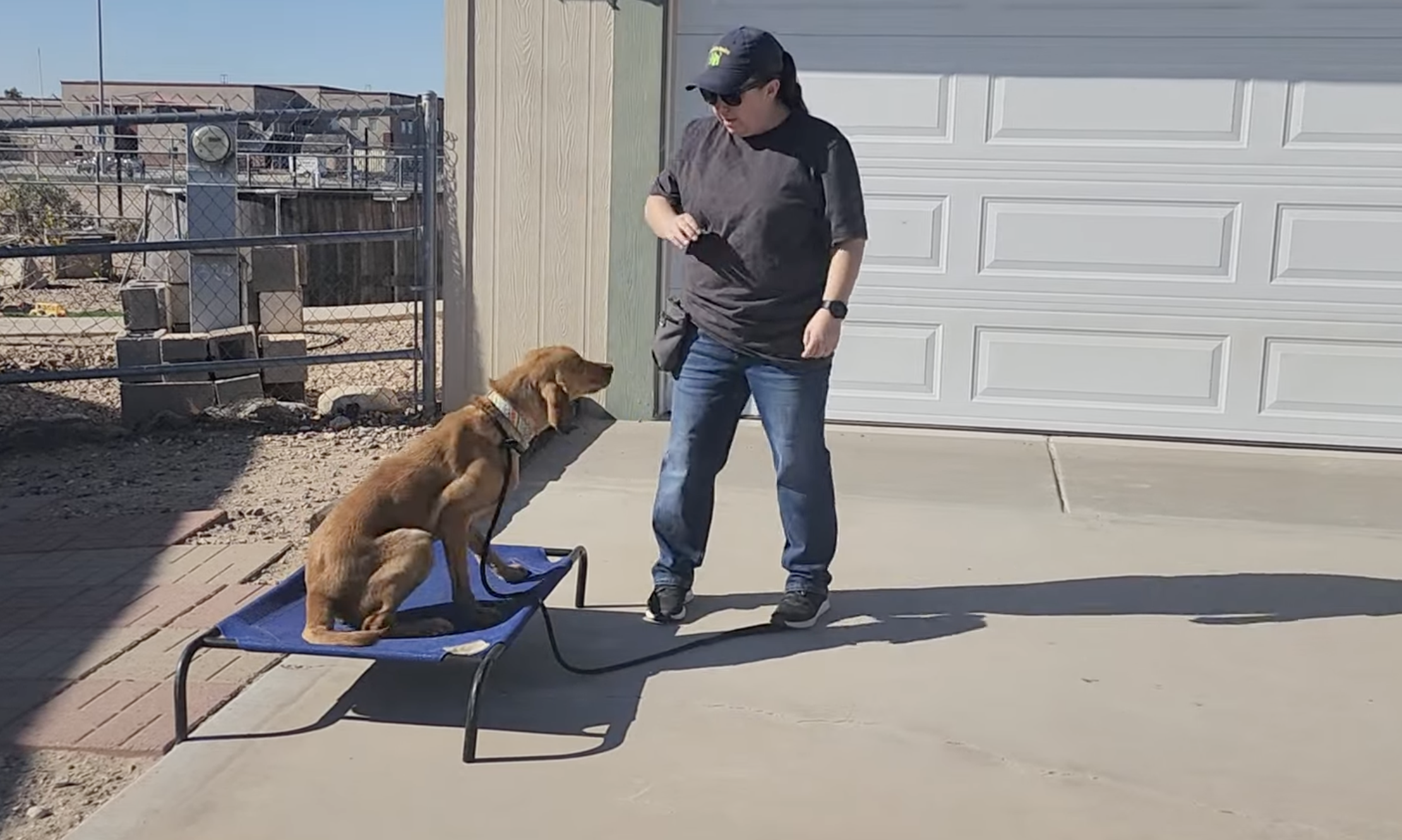
A qualified trainer can help evaluate a potential service dog candidate, build an appropriate training plan, troubleshoot problems, introduce public access work, develop task training, and provide an outside perspective when something isn't progressing as expected.
That outside perspective can be especially valuable because we naturally become emotionally invested in our own dogs.
Sometimes we see potential because we desperately want the dog to succeed.
A trainer has the responsibility to look at the dog in front of them and ask a different question.
Is this dog comfortable, capable, and appropriate for the work we are asking it to do?
Start With the Right Dog
Training matters tremendously, but the dog's temperament matters just as much.
Not every friendly, intelligent, obedient dog will make a good service dog.
A service dog candidate needs to be able to handle unfamiliar environments, recover from unexpected situations, work around people and other animals, tolerate everyday distractions, and remain comfortable while doing it.
The dog does not have to be perfect.
Young dogs may hesitate. Dogs may notice something unusual. A sudden noise might startle them.
What matters is how the dog responds and recovers.
Can the dog regain confidence and continue working? Does the dog generally enjoy going places and experiencing new environments? Can the dog remain engaged with the handler without becoming overwhelmed by everything happening around them?
These qualities are difficult to manufacture through training if the underlying temperament isn't there.
The Dog You Already Own May or May Not Be the Right Candidate
This can be one of the hardest parts of owner-training.
Many people begin with a dog they already love and naturally hope that dog can become their service dog.
Sometimes that works beautifully.
Sometimes it doesn't.
A dog may struggle with fear, environmental sensitivity, significant reactivity, inability to recover from stress, or simply dislike the demands of public work.
That does not make the dog a bad dog.
It may simply mean the dog would be happier as a pet.
Continuing to push a dog into service work because we have already invested months of training, money, and emotion into the process is rarely fair to the dog or the handler.
Part of responsible owner-training is being willing to change the plan if the dog tells us this isn't the right job.
Obedience Is Only Part of the Training
A service dog needs solid obedience skills, but obedience alone does not create a service dog.
Sit, Down, Stay, Come, Heel, loose-leash walking, settling, and impulse control provide an important foundation.
Then those skills need to work outside the training environment.
A dog that performs beautifully at home may behave very differently inside a grocery store, doctor's office, restaurant, airport, hotel, crowded event, or unfamiliar building.
Dogs have to learn that the same expectations apply in many different places.
That takes repetition and experience.
Owner-trainers should expect to spend a significant amount of time practicing skills in increasingly challenging environments rather than rushing from basic obedience directly into difficult public settings.
Public Access Training Takes Time
Public access is often one of the most underestimated parts of service dog training.
A service dog may encounter shopping carts, elevators, automatic doors, crowds, food on the floor, loud noises, slippery surfaces, narrow spaces, children, other dogs, people trying to interact with them, and situations the trainer never thought to specifically prepare for.
The goal isn't to expose a dog to every possible situation.
That would be impossible.
The goal is to help the dog develop enough confidence, experience, and trust in the handler that unfamiliar situations can be handled appropriately.
This is also why public access training should progress gradually.
Taking a young or inexperienced dog directly into an overwhelming environment doesn't create confidence. Sometimes it does exactly the opposite.
Good training builds difficulty as the dog is ready for it.
You Have to Be Prepared for the Difficult Days Too
Owner-training isn't only about whether you know how to teach the skills. You also need the confidence and determination to work through the days when things don't go according to plan.
Because those days will happen.
Your dog may perform a skill beautifully for weeks and suddenly seem to forget everything in a new environment. Something unexpected may frighten the dog. Adolescence may arrive and bring challenges you didn't have last month. You may have a public training session where very little goes the way you hoped.
That doesn't automatically mean your dog is failing.
It means you are training a dog.
The same is true for you. You are learning how to become a team, and neither member of that team is going to be perfect.
Unfortunately, public training adds another challenge.
People are watching.
When your dog is wearing a service dog or service dog in training vest, strangers may have expectations about how that dog should behave. They don't know where you are in training. They don't know what you are working on. They don't know what your dog looked like six months ago or what that dog will look like six months from now.
They see one moment.
And sometimes people can be mean.
Someone may see your young dog become distracted and decide you have a poorly trained service dog. They may see you actively working through a problem and assume you're trying to bring a fake service dog into a store.
People are going to judge.
Let them.
Their perception of one moment is not necessarily the truth about you, your dog, or the work you are doing together.
Owner-training requires enough confidence to continue doing appropriate training without allowing every look, comment, or imperfect session to convince you that you are failing.
You need a little bit of a thick skin, but you also need to be kind to yourself.
This team is a work in progress.
Consider Whether You Can Physically and Emotionally Do the Training
This is something prospective owner-trainers should think about honestly, and it has nothing to do with whether someone deserves or needs a service dog.
The question is whether the training the dog requires is something you can realistically do.
For example, imagine that crowds cause significant anxiety and one of the reasons you need a service dog is to help you navigate crowded environments or respond when your anxiety begins to build.
Eventually, that dog has to learn how to work in crowds.
Can you enter that environment while also paying attention to the dog, handling the leash, watching the dog's body language, reinforcing appropriate behavior, making training decisions, and remaining calm enough to help a young dog learn?
Maybe you can.
Maybe you can on some days but not others.
Maybe that particular part of training would be extremely difficult for you to do alone.
None of those answers automatically mean you cannot owner-train a service dog.
They tell you where you may need help.
A professional trainer, trusted training partner, friend, or family member may be able to assist with portions of training that are physically or emotionally difficult for you. What matters is recognizing those challenges ahead of time and having a realistic plan for addressing them.
Your disability should not be treated as a reason you cannot participate in training.
But pretending the disability will never affect the training process doesn't help you or the dog either.
Good planning means looking honestly at what both members of the team need in order to succeed.
A Service Dog Must Be Trained to Help With a Disability
Good manners in public do not by themselves make a dog a service dog.
A service dog is trained to perform work or tasks related to a person's disability.
What that looks like depends entirely on the needs of the individual.
A dog might retrieve needed items, interrupt a behavior, alert to a medical change, provide mobility-related assistance, guide a handler, or perform another trained behavior that helps mitigate the effects of a disability.
Some tasks are relatively straightforward to teach.
Others require considerably more specialized training.
The important part is that task training is intentional and directly connected to the handler's disability.
Be Prepared for the Time Commitment
Service dog training is usually measured in months and years, not weeks.
There will be periods when progress happens quickly and others when it feels like nothing is changing.
Young dogs also mature.
Adolescence can temporarily make previously learned skills look much less reliable. New behaviors can appear. Confidence can change. Distractions that didn't matter last month may suddenly become fascinating.
That doesn't automatically mean training is failing.
It means you are training a living, developing animal.
Consistency through those stages matters.
Owner-training also has to fit into real life. Work, family responsibilities, health, appointments, transportation, and the handler's own disability can all affect how much training is realistically possible.
Before beginning, it is worth considering not only whether you know how to train the dog, but whether you realistically have the time and energy to maintain that training over a long period.
Know When to Ask for Help
Needing help does not mean owner-training has failed.
Sometimes a few sessions with a knowledgeable trainer can prevent a small problem from becoming a much larger one.
Professional guidance may be especially helpful when selecting a candidate, beginning public access work, teaching more complicated tasks, working through confidence issues, or deciding whether a developing dog should continue in service work.
Waiting until a problem has become severe usually makes it harder to address.
Asking for help early gives both the dog and handler more options.
Be Willing to Evaluate the Dog Honestly
This may be the hardest responsibility an owner-trainer has.
You have to be willing to evaluate the dog you actually have rather than the service dog you hoped the dog would become.
There may come a point when the most responsible decision is to change careers.
That can be heartbreaking.
It can also be the right decision.
A dog should not have to spend years working in environments that consistently make the dog uncomfortable simply because a great deal of time and money has already been invested in training.
Successful service dog training is not measured only by whether the dog ultimately wears a vest.
Sometimes good training reveals that another path is better.
So, Can You Train Your Own Service Dog?
Yes.
For some people, owner-training is an excellent choice.
But before beginning, evaluate both sides of the potential team.
Is the dog suited for service work?
And are you prepared for what training that dog will require?
That includes the time commitment, public access training, task work, setbacks, difficult days, physical demands, emotional demands, and sometimes the uncomfortable experience of training in public while strangers form opinions about what they see.
You don't have to do every part alone.
There is a lot of room between completely training a service dog by yourself and purchasing a fully trained service dog.
Some owner-trainers work with a professional from the beginning. Others seek help with candidate selection, public access, specific tasks, difficult environments, or problems that arise along the way.
At Bark to Basics, we believe the goal should never simply be to get a dog through service dog training.
The goal is to develop a working partnership that is safe, reliable, sustainable, and appropriate for both the person and the dog.
Sometimes that means helping an owner and dog move forward together.
Sometimes it means helping someone recognize that a different dog may be better suited for the job.
And sometimes it means helping the person recognize where they need additional support to get there.
All of those can be successful outcomes when the needs and well-being of both members of the team remain at the center of the decision.