Our Service Dog Training Program
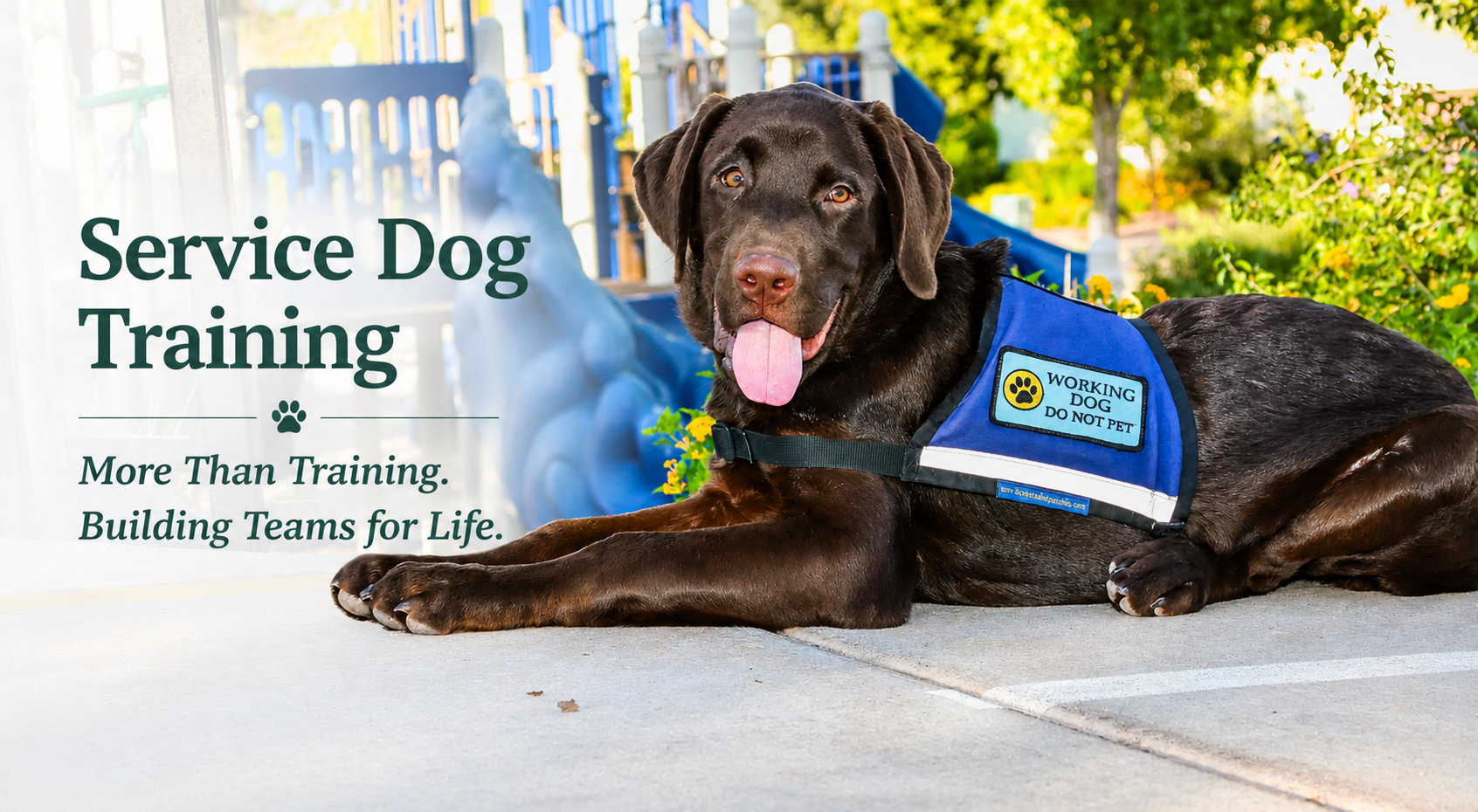
At Bark to Basics Canine Obedience Center, our service dog program is designed to prepare both the dog and the handler for a successful working partnership. We train Diabetic Alert Dogs and Psychiatric Service Dogs, with each dog receiving extensive obedience, public access, and specialized task training based on the needs of the individual they will serve.
While the specialized tasks may differ, our approach remains the same. We carefully develop each dog’s skills, provide comprehensive education for the future handler, and continue supporting our teams as they transition from training into everyday life together.
We believe a service dog is never truly “finished” learning. Training provides the foundation, but experience, maturity, continued reinforcement, and the relationship between dog and handler are what develop a successful working team over time.
HOW TRAINING WORKS
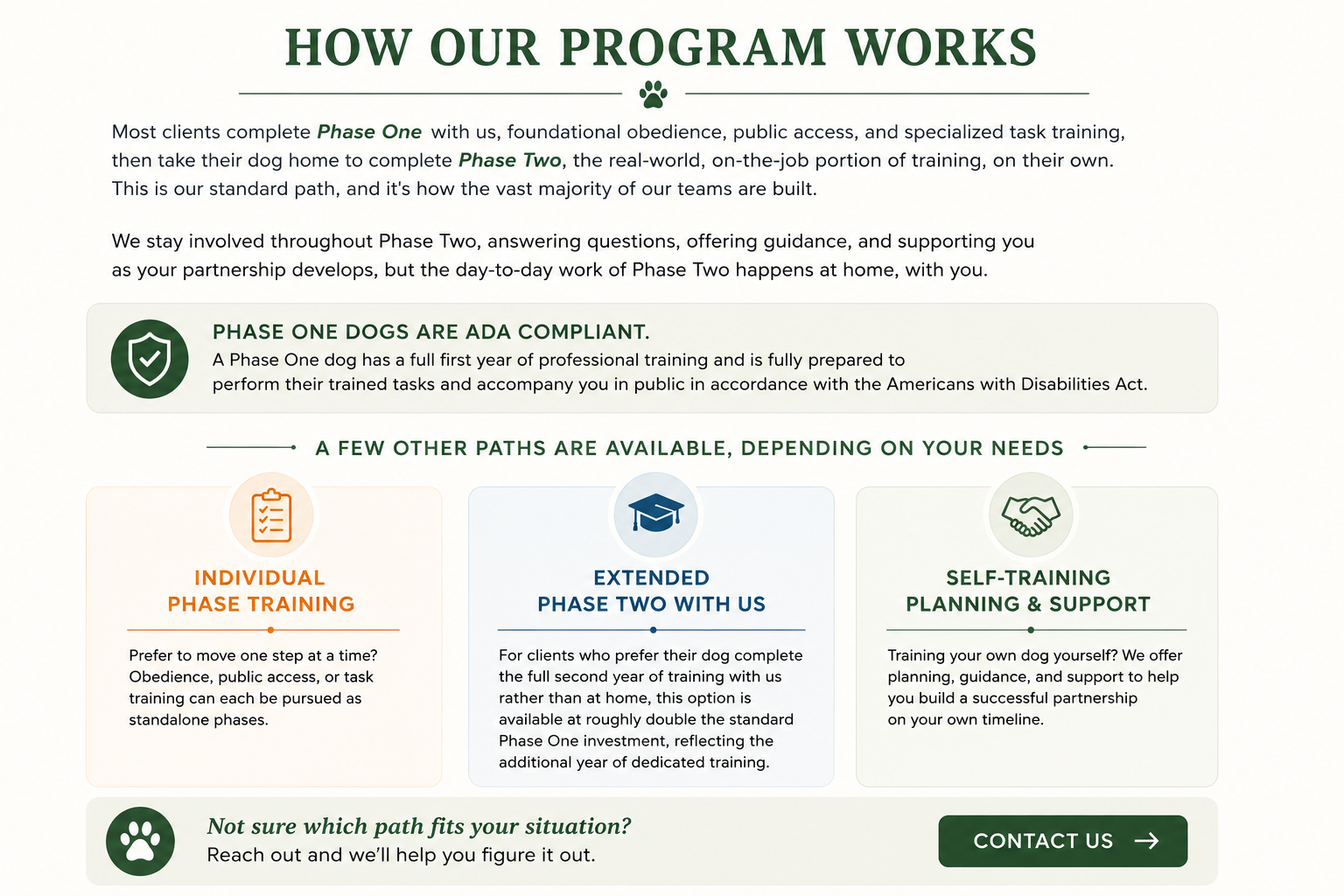
Phase One dogs come home with all of the foundational skills needed to begin their working life; extensive obedience, public access, and, depending on the type of service work, scent detection or individualized task training. Just as with professional athletes, teachers, and doctors, training and learning never really stop. With the support of our trainers, you'll be equipped with the knowledge and skills to keep reinforcing your dog's training, and to build a strong, lasting partnership with your new working companion.
Every dog learns at their own pace, so we don't rush a dog through training on a fixed timeline. Most dogs complete Phase One training as young adults, ready to begin their working life.
Phase Two: Going Home
Once Phase One is complete, training doesn't stop, it just moves home with you. We often describe Phase One as completing college: your dog has the knowledge and experience to do the job, but there's still real growth ahead before truly mastering it. Phase Two is where that happens, as your dog puts everything they've learned into daily, real-world practice. You're not on your own through this transition; our trainers remain available to answer questions, offer guidance, and celebrate the many successes along the way.
FULL TRAINING CURRICULUM
-
Completed vaccinations
Microchipped
Spay/neutered
Kennel trained
Evaluated for behavioral disqualifiers and lifestyle compatibility
Obedience training
Public access trained
Favorable house manners
Specialized task or scent detection training specific to the dog's role
-
Sit
Down
Sit Stay
Down Stay
Recall
Heel
Leave It
Drop It
Bed
Kennel
Let’s go
This way
Watch me
Wait
Go potty
-
Maintain appropriate transportation behavior – riding in a car, on a bus or tram
Controlled load and unload from a vehicle
Controlled entry and exit from a building
Sits or lies down and waits politely and under control while the owner sits at a table and fills out paperwork, has a meal, or visits with another person
Heels through a building walking at the pace of the owner – left turns, right turns, stopping
Heels next to wheeled items – wheel chair, stroller, shopping cart
Walks appropriately through a crowd – people coming toward the dog as well as people walking in the same direction
Appropriate reaction to sounds – dropped items, household appliances, children playing, rolling suitcases, cars, etc.
Appropriate reaction to being touched – clothing on racks, grocery bags, purses, etc.
Walks on a variety of surfaces – concrete, sand, grass, wood chips, metal, etc.
Walks politely and maintains appropriate behavior around other dogs
Allows to be pet by a stranger / Pet by a stranger carrying something (bag, backpack, computer bag, etc.)
Maintains safe walking speed while ascending and descending stairs with the owner
Sits or stands appropriately in an elevator with controlled entry and exit
Waits at curb and appropriately crosses the street under control
Ignores food and containers on the floor
Comes when called past distractions
Sit-Stay and Down-Stay while a shopping cart approaches or passes
-
Maintains a down stay for extended periods
Appropriate behavior around new people
Appropriate behavior around food
Appropriate behavior around children
Walking politely next to handler throughout the house
-
Scent detection is the final phase of DAD training. Dogs are trained to detect and alert to low and high glucose levels, in both low and high distraction environments, including introduction to alerts at night. Families are also shown how to have the dog Go Tell someone a child is out of range. There is not a dog that will alert 100% of the time. Diabetic alert dogs are not finely tuned robots, they are living, breathing, free-willed animals trained to perform a specific task. With consistent, ongoing training, they've proven to be remarkable, trusted partners.
-
Tasks are individualized to each client's unique needs. After careful discussion, two to three specific tasks are identified and trained as part of the Phase One plan.
MATCHING & YOUR DOG
We typically have dogs already started in training, so we've had the chance to get to know their temperament and energy level, letting us thoughtfully match each dog to the client whose lifestyle they'll fit best. Once matched, your dog is trained around your real life, whether that means sports, cycling, farm life, or the busy pace of the city, so the transition from training into your home feels natural.
We understand some families have their heart set on a specific breed, color, or gender, or need a dog that's more hypoallergenic or low-shedding. We'll do our best to find and train a dog that fits what you need.
PREPARING THE HANDLER, NOT JUST THE DOG
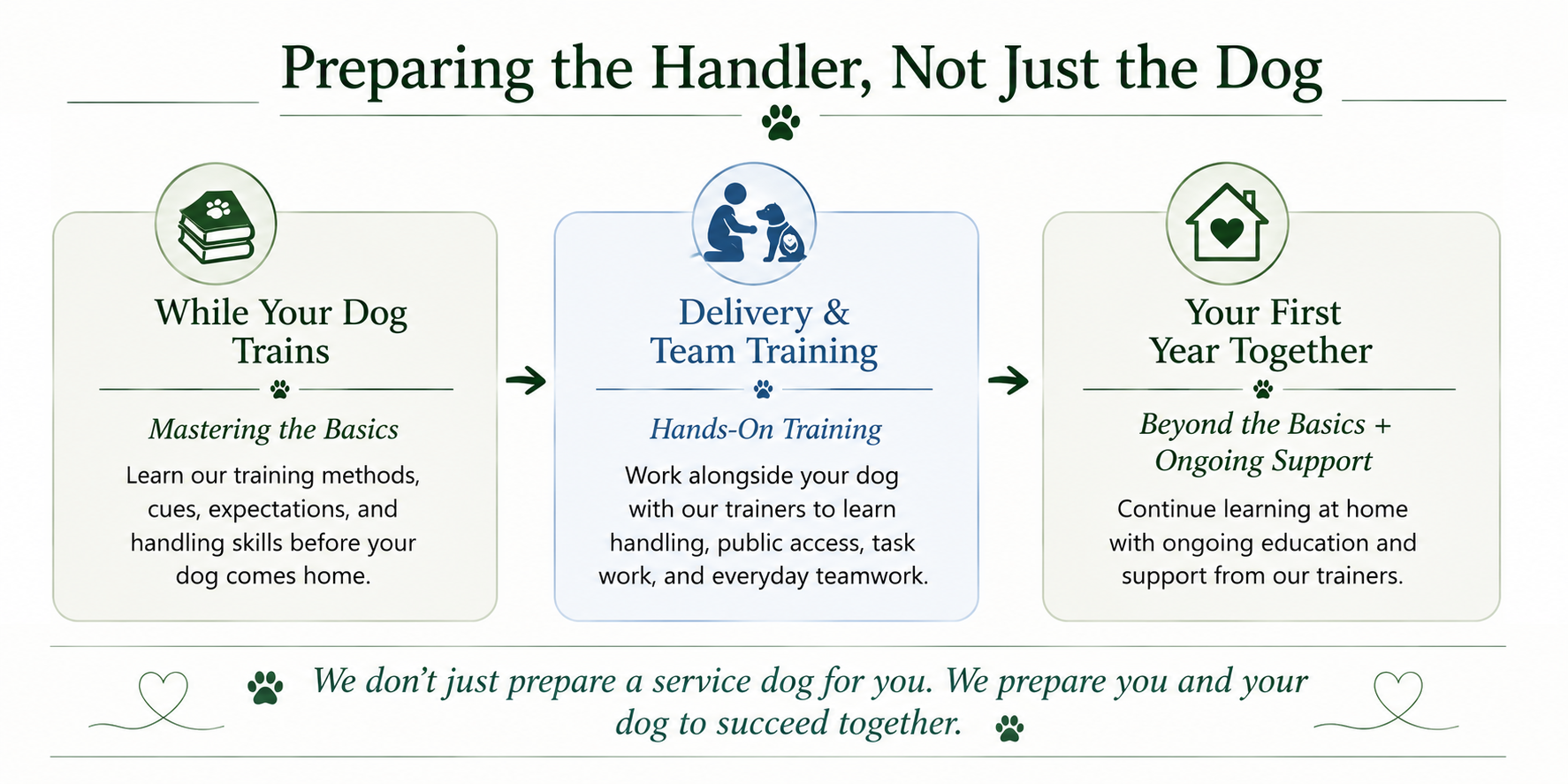
A successful service dog team depends on more than the training of the dog. The handler must also understand how to communicate with their dog, reinforce the skills they have learned, recognize when something needs attention, and continue building the partnership once the dog comes home.
That preparation begins long before delivery. While your dog is completing Phase One training with us, you will have access to our Mastering the Basics course. This gives you time to learn the training methods, cues, expectations, and handling skills we use so that when you meet your service dog, you are already familiar with the foundation of their training.
When it is time for your dog to come home, we work with you through in-person handler and team training. This is where everything begins to come together. You will learn how to work with your dog in everyday situations, reinforce obedience and public access skills, understand and respond to their specialized tasks, and begin developing the communication that makes a service dog team successful.
Once you return home, the learning continues. During Phase Two, you will have access to our Beyond the Basics course along with ongoing phone, email, and virtual support from our trainers. As you and your dog encounter new environments, routines, and experiences together, we remain available to help you work through questions and continue strengthening your partnership.
We don't just prepare a service dog for you. We prepare you and your dog to succeed together.
CURIOUS ABOUT THE HISTORY OF OUR TEAMS?
We could tell you how our program works, but we'd rather let the families who've lived it speak for themselves. See our reviews on Google → GOOGLE REVIEWS
Visit Our Dogs to see placements dating back to 2018.
READY TO LEARN MORE?
Every family's path looks a little different, and we're happy to help you figure out which one fits yours. Whether you're ready to apply, or just have questions before you take the next step, we'd love to hear from you.