Can My Dog Be a Service Dog? What Makes a Good Service Dog Candidate
/
One of the questions I receive fairly often is whether someone's own dog could be trained to become their service dog.
“My dog seems to know when I am having a hard time. He stays close to me when I am anxious, follows me everywhere, and seems to sense when something isn't right. He is a really good dog, and I have been wondering if he could become my service dog. Could you evaluate him?”
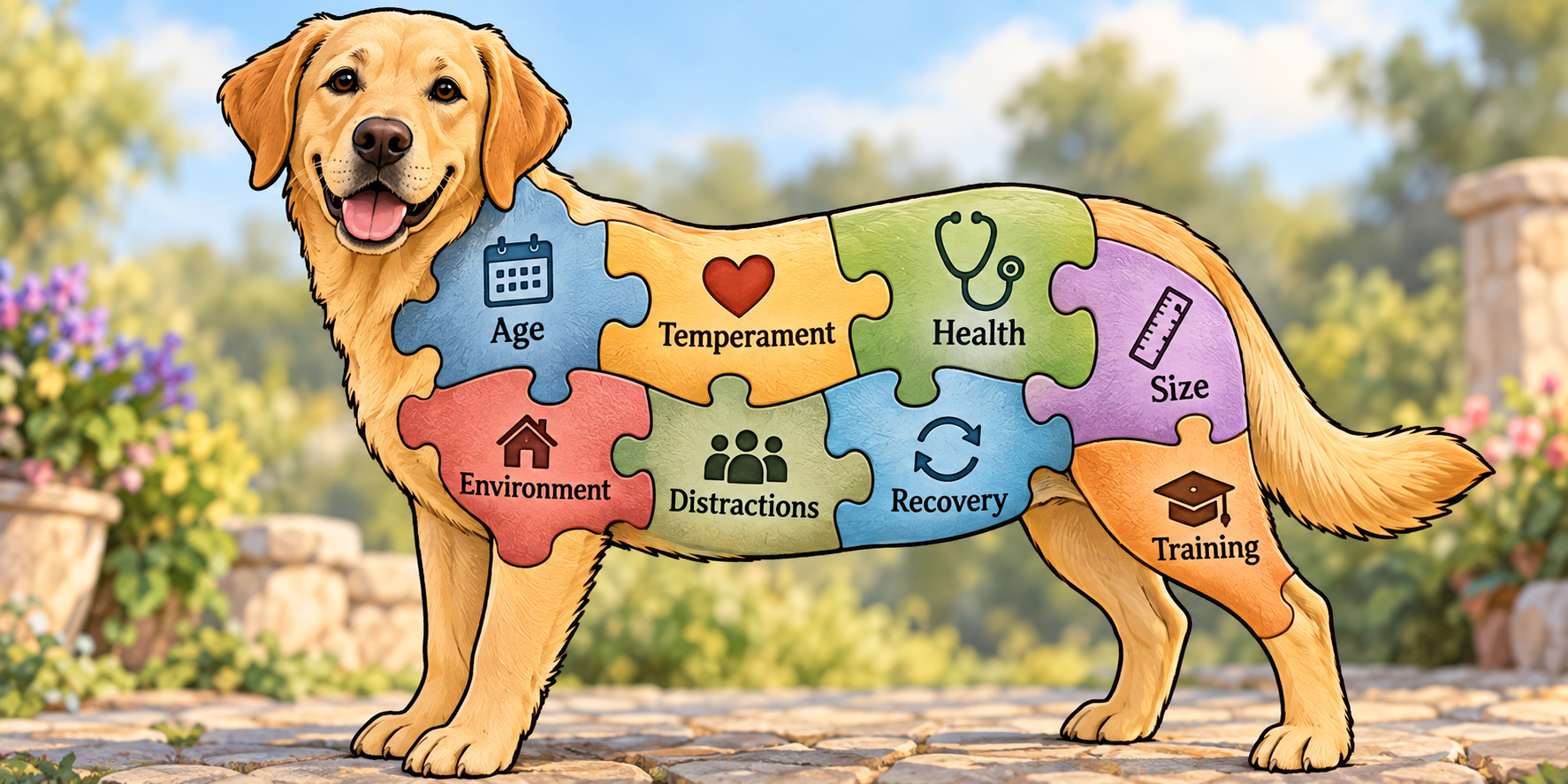
When someone asks me this question, there isn't one simple thing that tells me whether their dog has the potential for service work. I look at the whole dog and where they are starting from. Their age, temperament, training, health, comfort in different environments, ability to work around distractions, and how they recover when something unexpected happens all help me determine whether service dog training is a realistic path for that dog.
A service dog can be any breed. What matters much more than breed is whether the individual dog has the qualities needed for the work. Not every dog is suited for service work, and that isn't a reflection of whether they are a good dog. It is a matter of whether they can handle the demands that will be asked of them as a working service dog.
When I evaluate a potential service dog candidate, I am looking at the whole dog. Age matters. Temperament matters. Health matters. I want to know how the dog responds to unfamiliar environments, people, animals, sounds, movement, and distractions. I pay attention to what happens when something surprises or worries the dog and, just as importantly, how quickly the dog recovers afterward.
I am also looking at where the dog is starting from. A young dog that is still developing is very different from an older dog that would need to begin with basic obedience, confidence building, and learning how to function comfortably in public.
All of those pieces matter because the goal isn't simply to teach a dog a few tasks. The dog has to be able to perform those tasks comfortably, confidently, and reliably in public places where distractions are plentiful. People, other animals, shopping carts, unfamiliar sounds, movement, tight spaces, and unexpected situations are all part of the job. A dog may be able to perform a task perfectly at home, but service work requires them to remain focused and capable of doing that same job when the environment around them is busy and unpredictable.
Age Is One of the First Things I Consider
Age is one of the areas that surprises people most. I am often contacted by someone who has a three, four, or even five-year-old dog they would like to have evaluated for service work. Many times, their dog is smart, loving, and may even have some obedience training. So, it is understandable when they are surprised that age can be a significant factor in whether I recommend moving forward.
The reason isn't that an older dog can't learn. They absolutely can. The issue is how long it takes to develop a reliable service dog and how much working life the dog will have once that training is complete.
Developing a service dog can take a couple of years. The dog isn't simply learning obedience cues and a few disability related tasks. They are developing mentally and emotionally as they learn to work confidently in different environments, ignore distractions, meet public access standards, perform their tasks reliably, and handle the unexpected situations that come with accompanying a person through everyday life.
Think of it somewhat like purchasing an expensive piece of equipment that normally gives you many years of use. The cost of purchasing it is the same whether you begin with a new one or one that is already halfway through its expected useful life. You may be able to make the older one work beautifully, but you have invested essentially the same time, effort, and money for considerably fewer years of use.
I know that comparison may sound a little heartless when we are talking about a dog we love, but unfortunately, it is a practical reality that must be considered. Most families do not have unlimited time or financial resources. Service dog training requires a significant investment of both, and I think it is important to be honest about that before someone makes that commitment. This isn't about the value of an older dog. It is about whether it makes sense to invest the time and money required for service dog training when the dog may have a much shorter working life once that training is complete.
If we begin with a young dog and spend two years developing and training them, there can potentially be many years of working life ahead. If we begin that same process with a four or five-year-old dog, the training doesn't suddenly become shorter or less expensive because the dog is older. We may make essentially the same investment only to have a much shorter working career before age related changes or retirement need to be considered.
That is why, for our program, I generally would not consider a dog over two years old unless much of that foundation is already firmly in place.
If I am considering an older candidate, they should already have solid obedience and be comfortable accompanying their handler into pet friendly public places. I want to see a dog that can work around people and other animals without becoming reactive, that isn't overly concerned by unfamiliar sounds or activity, and that isn't nervous or easily overwhelmed in new environments.
When those pieces are already there, the equation changes. We aren't starting at the beginning. We can concentrate on the specific public access standards the dog still needs to meet and the disability related tasks they need to learn.
Ultimately, age isn't simply a number I use to accept or reject a dog. I am looking at the training the dog already has, how much work remains, how long it will reasonably take to prepare them for service work, and how much working life they are likely to have once we get there.
Temperament Matters Just as Much as Training
Any dog can learn obedience. We can teach behaviors. But temperament is something I look at very carefully when deciding whether a dog is suited for service work.
I am looking for a dog that is comfortable in their own skin. The dog doesn't need to be the most outgoing dog in the room, nor do I want a dog that feels the need to interact with every person or animal they see.
A service dog will spend a great deal of time around people they are not there to visit with, dogs they are not there to play with, food they are not supposed to eat, and activity that has nothing to do with them. They need to be able to notice those things without feeling the need to become involved with them.
I also look at how easily a dog becomes worried or overwhelmed. A dog that is consistently nervous in unfamiliar situations may find service work very difficult. We can build confidence through thoughtful training and exposure, particularly with a young dog, but we also have to recognize when nervousness or discomfort is part of the dog's temperament rather than simply a lack of experience.
The goal isn't to force a dog to tolerate a lifestyle that continually makes them uncomfortable. We want a dog that can genuinely become comfortable doing the work.
How Does the Dog Handle the World Outside the Home?
This is where we begin learning a great deal about a potential service dog candidate.
A dog can behave beautifully at home and still struggle when the environment changes. That is why I want to know how the dog functions away from home.
Pet friendly environments give owners plenty of opportunities to observe this without taking an untrained dog somewhere pets are not permitted. Stores such as Lowe's or Home Depot, pet stores, parks, outdoor events, and pet friendly street fairs can tell us a great deal.
These environments contain many of the things a future service dog will encounter. There may be shopping carts, children, other dogs, unfamiliar people, loud noises, different surfaces, equipment, food, traffic, and unexpected movement.
I am not simply interested in whether the dog can physically walk through the environment.
I want to know whether the dog can function in it.
What I'm actually watching for is:
Are they comfortable being there?
Can they remain attentive to their handler, even if they need some help doing so?
Are they curious about unfamiliar sights and sounds rather than fearful of them?
If they become distracted, can their attention be redirected?
Can they move through the environment without becoming increasingly nervous or overwhelmed?
I am also watching how the dog responds to people and other animals. A dog may need training to learn that they cannot greet everyone they see. That is very different from a dog that becomes fearful, overly excited, or reactive when people or other animals are nearby.
And something people sometimes overlook: can the dog simply settle?
A service dog isn't actively performing a task every minute they are in public. There will be plenty of time spent lying quietly under a table, waiting beside a handler, sitting through an appointment, or simply remaining settled while life continues around them.
Doing well in pet friendly environments does not mean a dog is automatically ready for public access as a service dog. What it gives us is valuable information about whether the dog has the environmental stability and foundation that make continued service dog training reasonable.
I Don't Expect a Dog to Never Be Startled
One of the things I pay close attention to is recovery.
There is sometimes an expectation that a service dog should be completely unaffected by everything around them. That is so very unrealistic. Dogs notice things. Something may surprise them. A cart may crash nearby. An object may fall. A strange surface may feel different under their feet. Something they have never encountered before may cause them to hesitate.
The fact that a dog notices or is startled by something isn't necessarily what concerns me.
I want to see what happens next.
Does the dog process what happened and move on? Can they reconnect with their handler? Are they willing to investigate something unfamiliar? Does their body relax again fairly quickly?
Or does that single experience change how the dog behaves for the next several minutes? Do they remain worried, begin scanning the environment, refuse to move forward, or become increasingly concerned when something similar happens again?
Recovery tells me a great deal about a dog's ability to handle the unpredictable nature of public life.
We can help dogs develop confidence and teach them how to work through new experiences, but a dog that consistently struggles to recover from everyday surprises may find the demands of service work stressful. This can also place additional stress on a handler who may already be struggling.
The goal isn't a dog that never reacts to anything. The goal is a dog that can process what happened, recover, and continue with their job.
Health Is Part of the Evaluation As Well
Behavior and training aren't the only considerations.
Service work can be physically demanding. Even when a dog's specific tasks are not particularly strenuous, accompanying a handler through daily life may involve considerable walking, standing, getting up and down, navigating different surfaces, traveling, and spending long periods away from home.
That is why the dog's overall health and physical suitability for the work matter.
The tasks the person needs also have to be considered. A dog's size, physical structure, health, and abilities should be appropriate for what they will eventually be asked to do.
Health also brings us back to the question of working life. We are making a substantial investment in developing a service dog, so we want to give that dog the best opportunity to work comfortably for many years.
Size Is Another Practical Consideration
Size is another factor I consider when evaluating a potential service dog. I often use 30 pounds as a general guide, but what really matters is the dog's actual size and build, not just a number on a scale.
Small dogs can certainly learn tasks, and size alone does not determine a dog's ability to learn. My concern is whether the dog can safely and practically work alongside their handler in the environments a diabetic alert or psychiatric service dog will encounter.
People sometimes assume that a very small service dog can simply be carried when they are in stores or other public places. I don't feel that is practical for the type of service work we train. The handler still needs to shop, carry belongings, open doors, interact with other people, and go about everyday life. Having to carry a dog at the same time can make those ordinary activities much more difficult.
Keeping a very small dog on the ground presents a different concern. In a busy public environment, a small dog can be difficult for other people to see. Shopping carts, people walking through crowded aisles, children, and other dogs can all create situations where both the dog and handler could be put at risk.
That is why I look for service dog candidates with the physical size and stature to safely and practically accompany their handler through everyday public life. This isn't because a smaller dog cannot learn a service dog task. It is because I have to consider the entire job the dog will be asked to do, and their actual size and build matter more than what a scale says.
Consider How Your Dog Will Be Trained
There is one more thing to consider if you are thinking about having your own dog trained as a service dog. It is important to understand how the training program you select works and what that will mean for you and your dog.
If you choose to work with a professional program that trains your dog for you, your dog may need to live with the trainer for extended periods of time, sometimes months at a time. This is different from private lessons where a trainer meets with you and your dog for an hour each week. If you choose to owner train your service dog, your dog will obviously remain with you, but you will take on much more of the day to day training yourself.
Before choosing a program, make sure you understand:
Where your dog will live during training
How long they may be away from home
What your role in the training process will be
What will be expected of you once your dog returns home
What happens if your dog is not progressing as planned
A Wonderful Pet May Not Be a Service Dog, and That's Okay
This can sometimes be the hardest part of an evaluation.
People love their dogs, and understandably so. The dog may sleep beside them, follow them from room to room, comfort them when they're upset, and seem to know when they are having a difficult day.
Those are wonderful qualities, and they may even be some of the reasons someone begins wondering whether their dog could become a service dog.
But those qualities alone don't tell us whether a dog will be comfortable and successful working in public.
Sometimes the kindest and most practical answer is that this particular dog is better suited to being a wonderful companion than a working service dog.
An evaluation isn't about finding reasons for a dog to fail. It is about making a thoughtful decision before asking the dog and their family to invest the considerable time, work, and expense required to pursue service dog training.
If you are considering having your dog trained as your service dog, I encourage you to look at all of these things before making that decision. Your dog doesn't need to already know how to be a service dog. That is what training is for. But they do need to have a good foundation to build on.
I hope this helps you look at your dog from a slightly different perspective and better understand some of the things a trainer considers when determining whether a dog may be a good candidate for service work.